Citizenship Crackdown Disproportionately Affects Bengali Muslims in Assam
In the eastern Indian states of Assam and West Bengal, a controversial citizenship verification drive has intensified in the wake of recent state elections, with rights researchers and journalists describing it as disproportionately targeting Bengali-speaking Muslims. Over the past year, more than a thousand people have reportedly been deported from Assam to neighboring Bangladesh, often without what advocates describe as adequate due process.
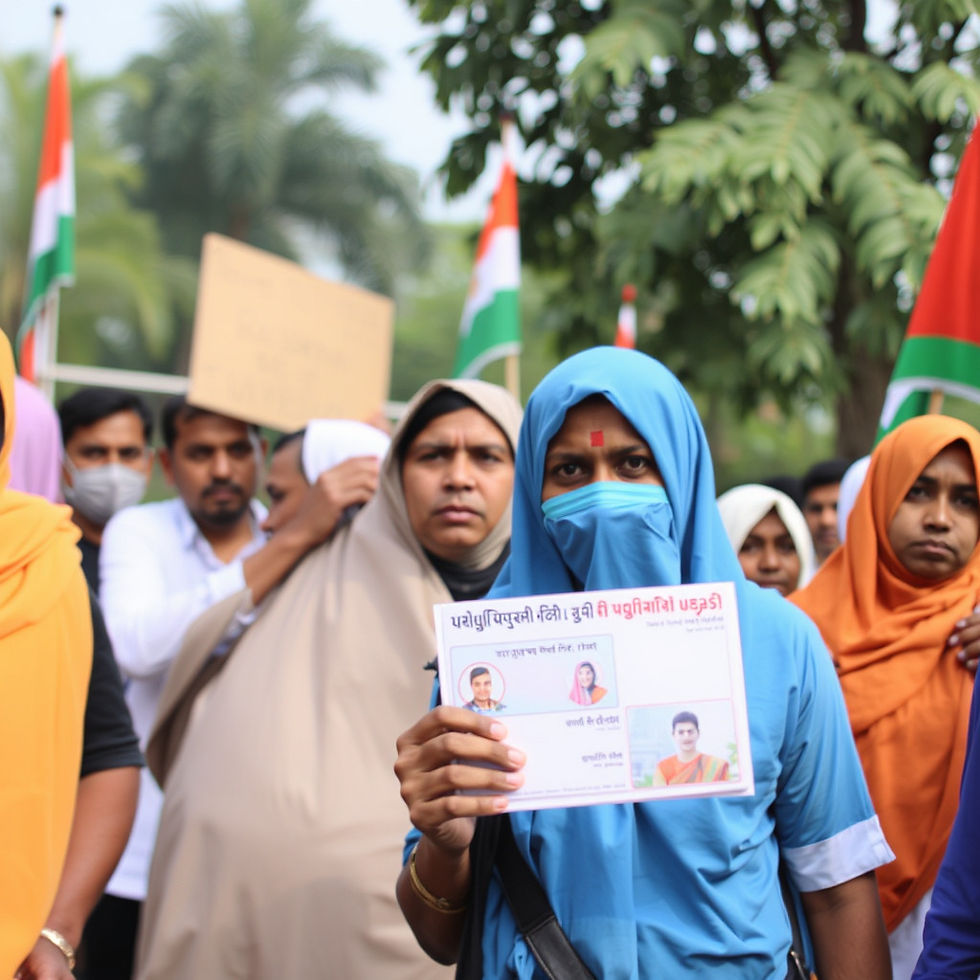
The crackdown centers on a decades-old immigration law that has been revived by Assam's state administration, which is led by Indian Prime Minister Narendra Modi's political party. Critics argue the law, whatever its original intent, is now being applied in a way that disproportionately falls on Bengali-speaking Muslim residents — many of whose families have lived on both sides of the India-Bangladesh border for generations, given the roughly 2,500-mile shared border and the region's long, intertwined history predating partition. Authorities in Assam and West Bengal have asked tens of thousands of residents to prove their citizenship, placing the burden of proof on individuals and families who, in many cases, have no other home or documented history anywhere else.
The human toll of this policy is playing out at the level of individual families. One case followed by reporters involved a multi-generational household in a remote Assam village where three generations risk becoming stateless after state authorities labeled family members "doubtful citizens." One resident, whose real name was withheld to protect his identity, described being separated from his wife after she was taken away due to questions over her ethnicity and documentation — a rupture he struggled to put into words when interviewed.
The political context surrounding this crackdown adds further weight to concerns about its motivations. During campaign season, Modi himself invoked language describing Bengali Muslims as "infiltrators" at his own rallies, framing their removal as a policy achievement. Assam's chief minister, Himanta Biswa Sarma — recently reelected and known as a close political ally of Modi within the state — used similarly charged rhetoric, vowing to intensify the crackdown against the Bengali Muslim community. Since taking office in 2021, Sarma has also been accused of using colonial-era land laws and forest protection statutes to evict tens of thousands of people, the overwhelming majority of them Muslim, from land they had occupied for years.
Separately, independent research analyzing political social media activity in Assam and West Bengal found that a significant share of posts from the ruling party matched international definitions of hate speech, frequently characterizing Bengali-origin Muslims as outsiders or infiltrators rather than long-standing residents — a pattern that rights advocates say has helped normalize the citizenship crackdown among the broader public, even as it upends the lives of families who, in many cases, have never lived anywhere else.
Beyond the immediate deportations, the broader concern raised by human rights researchers is precedent: that the tools and rhetoric developed in Assam's citizenship drive could be extended to other Indian states going forward, using citizenship verification as a mechanism for targeting religious minorities under the guise of routine immigration enforcement. For a policy framed publicly as protecting national borders, the pattern of who ends up losing citizenship — and the political language accompanying it — has drawn sustained scrutiny from journalists, scholars, and human rights organizations tracking religious freedom conditions across South Asia.
Source: PBS News — Read the full report



Comments