Three Pastors Killed, Dozens Taken Hostage in Manipur
- SARFO Editorial
- 2 hours ago
- 2 min read
On May 13, 2026, three Kuki-Thadou pastors were killed by gunmen in Manipur, India, as they returned from the United Baptist Convention Assembly — a gathering explicitly focused on reconciliation and peacebuilding between the region's long-divided Kuki-Zo and Naga tribal communities. The killings triggered an immediate and volatile chain of retaliation: armed Kuki groups abducted Naga civilians in the hours that followed, prompting Naga armed groups and residents to respond in kind by abducting Kuki civilians.
By the time negotiations began, at least 20 civilians remained held hostage across both sides. Church leaders, tribal elders, civil society organizations, and security agencies were drawn into urgent talks to de-escalate the situation. A day-long standoff on May 15 eventually led to a partial breakthrough, with 14 Naga civilians and 14 Kuki civilians released the following day — among them, according to reporting, the wives of the three murdered pastors.
International Christian Concern, along with other advocacy organizations following the crisis, described the killing of religious leaders returning from an explicitly peace-oriented gathering as a particularly severe blow — both to the individuals and families directly affected, and to the broader effort to de-escalate tensions in a region already shaped by years of ethnoreligious violence. Faith leaders working specifically toward reconciliation being targeted sends a discouraging signal about how fragile any peace process in Manipur remains.
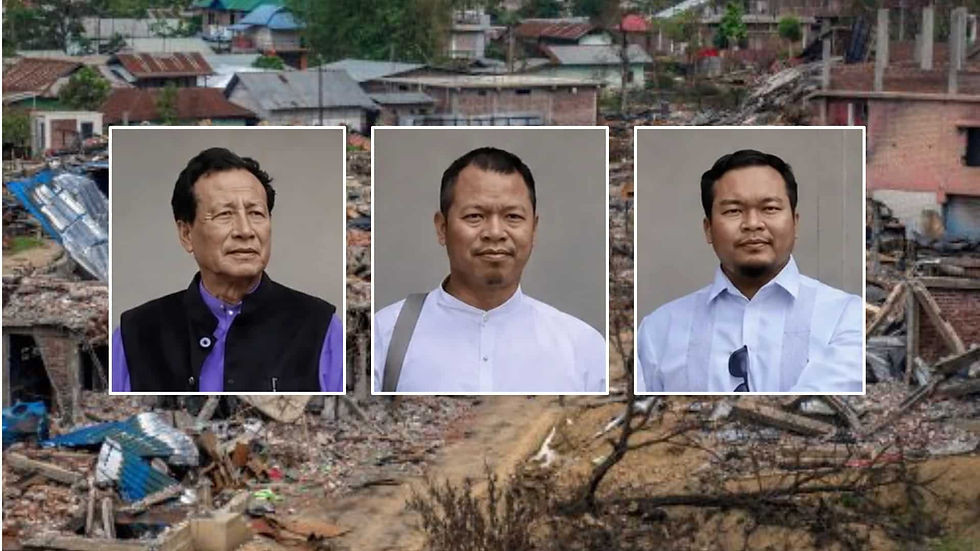
This incident cannot be understood in isolation. Manipur has been in a state of serious ethnoreligious conflict since violence first erupted in May 2023 between the predominantly Meitei population and Kuki-Zo tribal communities, a large share of whom are Christian. That initial wave of violence saw hundreds of churches burned, an official death toll that has since climbed past 260, and tens of thousands of people displaced from their homes — many of whom, according to reporting as recent as March 2026, remain in relief camps three years later, still unable to return to communities where their property was destroyed or is now occupied by others.
While the conflict is frequently described in ethnic terms, a number of observers — including Manipur's own Catholic Archbishop, who is Meitei himself — have pointed to religious targeting as a distinct and significant dimension, noting that Christian communities from both the Meitei and Kuki-Zo sides were disproportionately affected by the destruction of churches and religious property. The persistence of violence years after the initial outbreak, including this latest hostage crisis, suggests that whatever combination of ethnic and religious tension originally ignited the conflict continues to simmer beneath a surface of intermittent calm.
For SARFO's purposes, this event is a reminder that religious freedom monitoring in South Asia isn't only about tracking legal restrictions or discrete acts of mob violence — it also means following protracted, multi-year conflicts where religious identity remains entangled with ethnic and political fault lines long after international attention has moved on. As of this writing, it remains unclear whether those responsible for the pastors' killings have been identified or apprehended, and whether all hostages from the retaliatory abductions have since been released.
Source: International Christian Concern — Read the full report
Comments